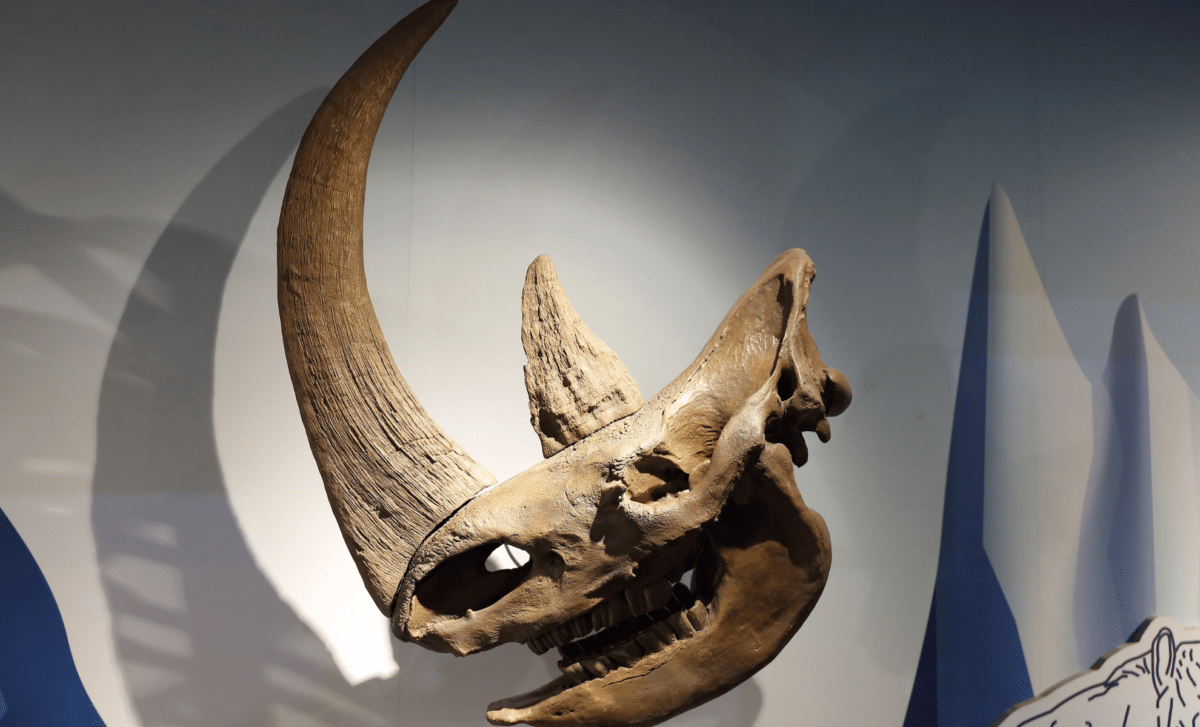
When you think of a rhinoceros, you likely picture the heat of the African savanna or the humid jungles of Asia. You definitely don’t picture the Canadian High Arctic.
But in a stunning discovery confirmed this March, paleontologists have identified a new species of extinct rhino—Epiatheracerium itjilik—that once called the frozen north its home. This find is doing more than just adding a new name to the fossil books; it’s changing our entire map of how life migrated across the globe.
1. A Rhino in the Snow? (Well, not exactly)
23 million years ago, during the Early Miocene, the Arctic wasn’t the treeless, icy landscape we see today. However, it wasn’t a tropical paradise either. This “Arctic Rhino” lived in a forested lake habitat on what is now Devon Island, Nunavut.
The discovery of such a complete fossil this far north suggests that rhinos were far more adaptable than we ever gave them credit for. They weren’t just “heat-seekers”; they were explorers.
2. The Missing Link Between Continents
For decades, scientists debated exactly when and how rhinos moved between Europe and North America.
This discovery proves that rhinos crossed into North America much more recently than previously thought, using northern routes that were previously considered too cold for them. It turns out the Arctic was a massive “interstate highway” for prehistoric giants.
3. Why This Matters Today
Discoveries like the Epiatheracerium itjilik aren’t just about the past. They help us understand climate resilience. By studying how these massive creatures survived in shifting northern temperatures millions of years ago, researchers can better predict how modern species might adapt (or fail to adapt) to our current rapidly changing climate.
4. Other Mind-Blowing Discoveries This Month
If Arctic rhinos aren’t enough for you, March 2026 has been a “Golden Month” for discovery:
-
Deep Sea Wonders: 24 new species were just discovered in the Pacific’s Clarion-Clipperton Zone, including a brand-new “superfamily” of life.
-
The “Rotten Egg” Planet: Astronomers found a new type of exoplanet (L98-59d) that is essentially a molten rock world with an atmosphere that smells like sulfur.
-
Ancient Tech: Archaeologists in Siberia recently unearthed 10,500-year-old fishing gear that uses sophisticated “notched” fastening systems—technology we thought was much more modern.
The Bottom Line: Every time we think we have Earth’s history “figured out,” a single bone in the Arctic or a telescope image from deep space reminds us that we’ve barely scratched the surface.